Weather in motion
Adjust manual weather effects. Their values are separate from recorded weather.
Let the weather take shape.
Light, particles and moving air share one scene. Adjust an effect and watch how the encounter changes.
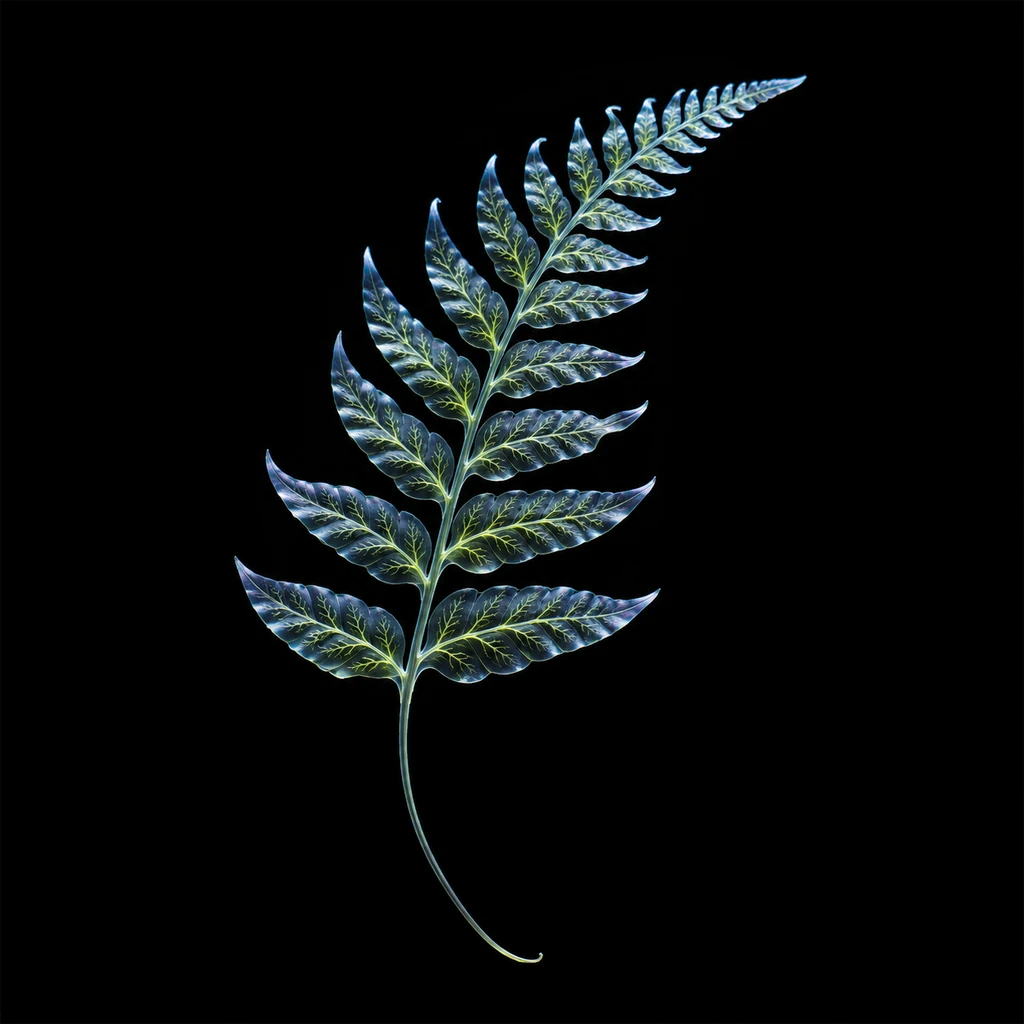
Filix is Xeed artwork. This generic plant proxy is not a forecast for your observed species. Visual controls do not change the teaching model.
Opening your saved simulation…
A life coming into view…
Visual sky cycle · scenery and sky hours are authored. The air-quality haze appears only with a linked daily record.
Display options & performance
Measuring the visible weather layer…
CPU draw time excludes GPU/compositor work. Reduced-motion preferences stop continuous effects; offscreen layers stop drawing. Lightning is a slow local stroke, without full-screen flashes.
Layered fine rain, a soft cloud veil and small surface splashes.
Rain, snow & airflow
Sky, fog & light
Temperature, air & root zone
At the chosen lighting time: 15.8 °C illustrative air temperature; 0.14 kPa estimated VPD. Humidity alone does not create rain or prove fog. These controls do not simulate injury.
Visibility sliders are artistic intensity, not measured rainfall rate. Combining rain, snow or dust here explores visual language; it is not a plausible-weather generator.
Connect UE or TouchDesigner
Send this scene to your visual engine.
The parameters stay separate from the plant model. An engine acknowledgement confirms receipt; it does not verify rendered pixels.
Connect a local bridge
Start the bridge on the same computer as this browser. Copy its temporary token from the local pairing page. It stays in this page’s memory.
Hosted HTTPS pages may need browser permission to reach this local bridge. The website server never connects to your local engine. Video output needs a separate delivery path.
Not connected. Check the parameters without an engine, or pair with your local adapter.
Parameter JSON
{
  "schemaVersion": "xeed.render.v1",
  "sequence": 0,
  "source": "manual-visual",
  "weather": {
    "rain": 80,
    "snow": 0,
    "wind": 12,
    "direction": 0,
    "cloud": 90,
    "fog": 18,
    "dust": 0,
    "hour": 13,
    "dayC": 16,
    "nightC": 10,
    "humidity": 92,
    "soilWater": 80
  },
  "plant": {
    "leafOpenness": 0.6,
    "leafHue": 135,
    "motionEnergy": 0.2
  }
}
Weather factors, visual channels & plant-model connections
| Factor | Visible signal | Plant connection | Evidence boundary |
|---|---|---|---|
| Temperature / day–night range | Warm/cold edge light; time-dependent sky | Cooling, spring heat and reference ET | NOAA daily low/high; hourly curve is illustrative |
| Rain | Fine rain at three depths + small surface splashes + wet reflections | Water input, runoff, drainage and delayed recovery | Daily precipitation is observed; intensity/timing is not |
| Snow / snowpack | Wind-driven flakes + cold depth cues | Snow-water storage and degree-day melt | NOAA depth is separate from modeled water equivalent |
| Wind / direction / gusts | Staggered leaf response + sparse airborne motes + tilted drops | Mechanical motion only in this prototype | Speed observed; direction/gust sequence not included |
| Clouds / sunlight / day length | Rolling dark canopy + suppressed rays + night lighting | Astronomical day length; actual cloud radiation not modeled | Day length calculated; cloud/hour manually authored |
| Relative humidity / VPD | Numeric drying-demand cue; dew-like rim only when authored | Future water-loss refinement; no instant biological damage | Humidity is a manual assumption, not in the pinned dataset |
| Fog / visibility | Slow translucent layers + depth attenuation | Visibility cue; no soil-water input | Explicit visual control; humidity alone does not prove fog |
| Lightning | Local branching stroke + gradual glow; no full-screen strobe | No injury or growth effect without a validated model | Manual visual event; not inferred from rain |
| Soil water / saturation | Ground glow, wet/dry cues and a labeled water meter | Root-zone balance with daily memory | Model estimate or manual preview; not a sensor |
| Dust / sand / smoke | Amber grains + reduced visibility + directional streaks | No Philadelphia frequency or toxicity model | Fictional Sandtide reference; not an AQI or smoke measurement |
| Air quality index | Dated category badge and optional abstract density veil | No calibrated plant-injury response | Preliminary AirNow Philadelphia monitor peak; not visible haze or live conditions |
| Heatwave / frost / drought / flood | Sequences of the above conditions, with explicit duration | Extremes and damage thresholds need species/site evidence | Not separate random decoration or calibrated hazards |